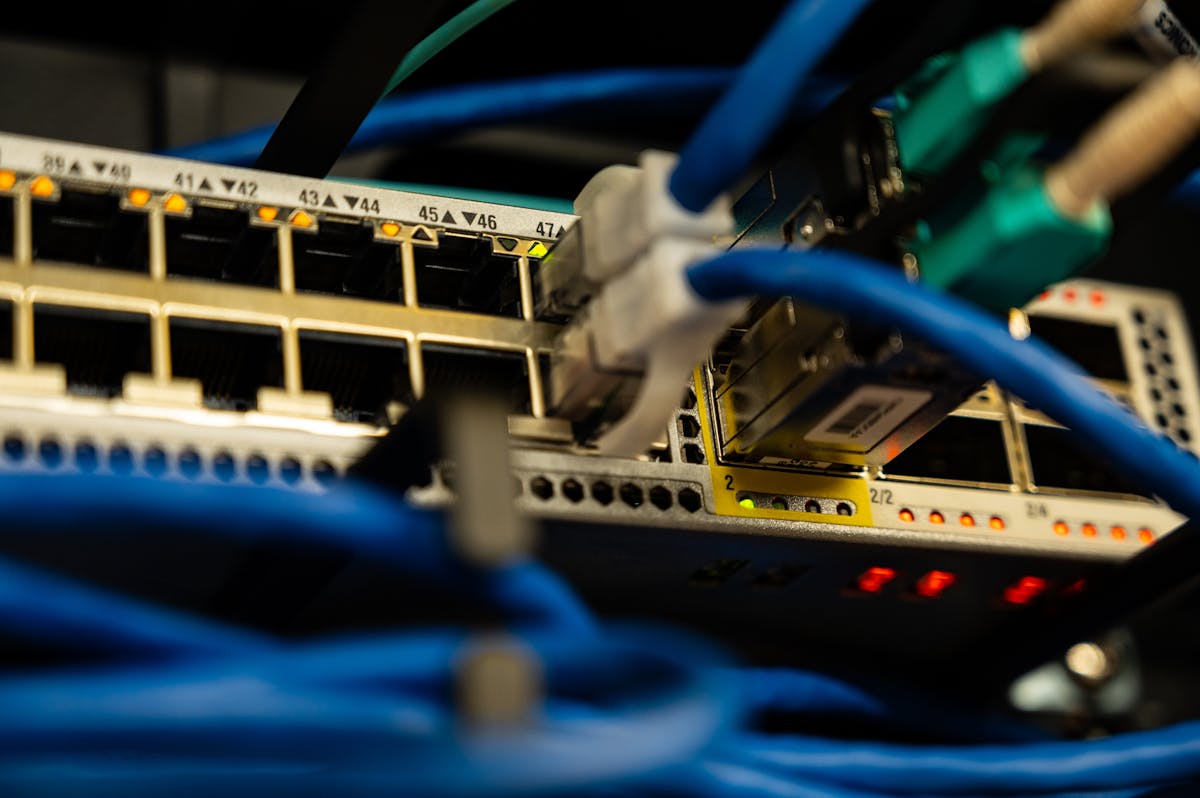
If you work in IT at a South African enterprise, there is a very good chance you are staring at a Cisco Catalyst 2960 right now. Walk into any server room from Sandton to Stellenbosch, from a Nedbank branch to a University of Pretoria lecture hall, and you will find racks of these sturdy layer-2 switches quietly doing what they have done for the better part of a decade: keeping networks running.
That era is coming to an end. Cisco has formally announced end-of-sale and end-of-life dates for the entire Catalyst 2960 family — the 2960-Plus, the 2960-L, the 2960-X, and the 2960-XR. Depending on the model, the final date of support falls between October 2026 and October 2027. After that, Cisco will not release security patches, fix bugs, or provide Technical Assistance Centre (TAC) support — even if you are paying for a SmartNet contract.
The scale of the impact in South Africa is difficult to overstate. The 2960 series has been the default enterprise access-layer switch for well over a decade. Banks, retailers, government departments, hospitals, universities, and mining operations have deployed tens of thousands of these units across the country. Many organisations refreshed their networks around 2014 to 2018, meaning their 2960X and 2960XR switches are now between seven and eleven years old — old by global standards, entirely normal by South African ones.
In an era of escalating cyber threats — with South Africa consistently ranking among the most-targeted countries on the continent — running network infrastructure without security patches is not a theoretical risk. It is a compliance issue, an insurance liability, and, increasingly, a board-level concern.
The Timeline: Key Dates You Cannot Afford to Miss
Cisco's end-of-life process follows a structured timeline. Each milestone strips away another layer of support until, on the final date, the product is entirely unsupported. Here are the dates that matter for South African businesses still running 2960-series hardware.
| Milestone | 2960-Plus | 2960-L | 2960-X | 2960-XR |
|---|---|---|---|---|
| End-of-Sale | 31 Oct 2021 | 31 Oct 2021 | 31 Oct 2022 | 31 Oct 2022 |
| End of SW Maintenance | 31 Oct 2022 | 31 Oct 2022 | 31 Oct 2023 | 31 Oct 2023 |
| End of Security/Vulnerability Support | 31 Oct 2026 | 31 Oct 2026 | 31 Oct 2027 | 31 Oct 2027 |
| Last Date of Support | 31 Oct 2026 | 31 Oct 2026 | 31 Oct 2027 | 31 Oct 2027 |
A few things to note. The end-of-sale date has already passed for every model in the family. You cannot order a new 2960 from Cisco today — that ship sailed in 2021 and 2022. The end of software maintenance has also passed, meaning Cisco is no longer releasing bug fixes. What remains is security vulnerability support, and that window is closing fast.
For 2960-Plus and 2960-L owners, the final curtain falls in October 2026 — roughly eighteen months from now. For 2960-X and 2960-XR owners, there is a little more breathing room: October 2027. But if you have not started planning, eighteen months is not as long as it sounds when you factor in procurement timelines, budget cycles, and the sheer complexity of swapping out access-layer switches across multiple sites.
What "End of Support" Actually Means for Your Network
There is a common misconception that end-of-support simply means "Cisco won't answer the phone." The reality is more serious than that.
No more security patches. This is the big one. When a new vulnerability is discovered in IOS — and vulnerabilities are discovered regularly — Cisco will not release a fix for end-of-life hardware. Your switches will remain permanently exposed. In 2024 alone, Cisco published over a dozen security advisories affecting IOS and IOS XE software. Any future vulnerability in 2960-series code will go unpatched.
No more bug fixes. Software maintenance has already ended. If you encounter a bug that causes packet loss, spanning-tree instability, or VLAN misconfiguration, there will be no fix coming. You work around it or you replace the switch.
No more SmartNet or TAC support. Once the last date of support passes, Cisco will not renew SmartNet contracts. The Technical Assistance Centre will not troubleshoot issues on end-of-life equipment, even if you are willing to pay. You are on your own.
Insurance and compliance exposure. This is the one that catches boards off-guard. Cyber insurance underwriters are increasingly asking about end-of-life equipment in their questionnaires. Running unsupported network infrastructure can affect your premiums, your coverage, or both. For organisations subject to POPIA, the Protection of Personal Information Act, running unpatched network equipment through which personal data flows is a risk that auditors will flag.
"The difference between 'still works' and 'still supported' is the difference between driving a car with an expired licence and driving one without brakes. The switch will keep forwarding packets — but the moment something goes wrong, you have no safety net."
Your Four Options — And What They Actually Cost
There is no single right answer here. The best approach depends on your budget, your risk tolerance, and where each switch sits in your network. Here are the four realistic options available to South African businesses.
Option 1: Migrate to New Catalyst 9200 or 1300 Series
Cisco's recommended migration path is to the Catalyst 9200 series (the direct successor to the 2960-X/XR) or the Catalyst 1300 series (positioned as the successor to the 2960-L/Plus for smaller deployments). These are modern, cloud-manageable switches running IOS XE, with support for USB-C console ports, Wi-Fi 6E-ready PoE budgets, and DNA Centre integration.
The upside is clear: full Cisco support, the latest security features, and a platform that will be supported well into the 2030s. The downside is cost. A Catalyst 9200-48P (48-port PoE+) lists at roughly R35,000 to R45,000 depending on the configuration, before any discount. For an organisation with 50 to 100 access-layer switches, the hardware alone runs into the millions — before you account for installation, configuration, and downtime.
Best for: Organisations with capital budget, greenfield deployments, and those who need the latest features such as SD-Access or advanced telemetry.
Option 2: Buy Refurbished 2960-X Units to Extend Life
Here is the option that does not appear in Cisco's migration guide but makes financial sense for many South African businesses. The 2960-X and 2960-XR were exceptional switches — reliable, well-understood, and running mature, stable IOS code. Refurbished units from specialist suppliers are available at up to 90% less than the original list price.
A refurbished WS-C2960X-48FPS-L, for example, can be sourced for around R4,000 to R7,000 — compared to R40,000-plus for a new Catalyst 9200 equivalent. These units are fully tested to military-specification standards, reset to factory defaults, and typically come with a 90-day hardware warranty.
The trade-off is that you are buying into a platform that is itself approaching end-of-life. But if your goal is to extend the life of your access layer by three to five years while you plan and budget for a full migration, refurbished 2960-X switches are a pragmatic bridge.
Best for: Organisations that need to maintain operations while planning a longer-term migration, budget-constrained environments, and non-critical network segments.
Option 3: Third-Party Maintenance and SLA Hardware Support
Once Cisco stops offering SmartNet, your switches do not have to go unsupported. Third-party maintenance (TPM) providers offer hardware SLA support for end-of-life equipment at 40% to 60% less than the cost of a SmartNet contract.
A typical TPM arrangement includes next-business-day or four-hour hardware replacement from a local spare-parts depot, phone and email technical support, and access to engineers who know IOS inside out. The advantage for South African businesses is locality: a Johannesburg-based parts depot means a replacement switch can be on-site within hours, not days.
What TPM does not cover is software updates. You will not get new IOS versions or security patches — those come from Cisco, and Cisco has stopped issuing them. TPM is about keeping your hardware running, not updating your software.
Best for: Organisations with large installed bases of end-of-life equipment that still functions well, and those who need guaranteed response times without paying for new hardware.
Option 4: The Hybrid Approach
This is what most South African enterprises will end up doing, whether they plan to or not. The hybrid approach means deploying new Catalyst 9200 switches where it matters most — core infrastructure, data-centre access layers, sites handling sensitive data — and using refurbished units or TPM contracts for everything else.
A typical hybrid deployment might look like this: new Catalyst 9200 switches for the head office and primary data centre, refurbished 2960-X units for branch offices and warehouse floors, and a TPM contract covering the entire installed base. The total cost is a fraction of a full greenfield migration, and the risk is managed proportionally.
Best for: Most South African enterprises. It is the pragmatic middle ground between doing everything and doing nothing.
The South African Factor
This is not a migration happening in a vacuum. South African businesses face a set of constraints that make the 2960 end-of-life particularly challenging.
The rand. New Cisco equipment is priced in US dollars. With the rand trading between R18 and R19 to the dollar at the time of writing, a switch that costs $2,000 in the United States costs over R38,000 before import duties and VAT. Every cent the rand weakens adds thousands to a large-scale migration project. This is the single biggest reason why refurbished equipment and TPM contracts are more popular in South Africa than in developed markets.
Longer equipment lifecycles. In the United States and Europe, a five-year hardware refresh cycle is standard. In South Africa, seven to ten years is common, and twelve is not unheard of. The 2960 series has benefited from this: many units deployed in 2014 and 2015 are still running without issue. But longer lifecycles mean that when end-of-life does arrive, the installed base is larger and the migration more disruptive.
Local support matters more. When something breaks in Johannesburg at 2 a.m., you cannot fly in a Cisco engineer from Amsterdam. You need a local partner with spare parts on the shelf and engineers who can be on-site before sunrise. This is where local IT infrastructure specialists have a significant advantage over global support contracts that route through offshore call centres.
BBBEE procurement. For organisations subject to Broad-Based Black Economic Empowerment scoring, the choice of supplier matters. Procuring through a BBBEE-compliant local supplier can contribute to your scorecard — something that does not factor into Cisco's migration guides but matters in every South African tender document.
Planning Your Migration: A Practical Checklist
Whether you are migrating next quarter or next year, the planning starts now. Here is a practical checklist for IT managers facing the 2960 end-of-life.
- Audit your current 2960 inventory. Document every switch: model number, serial number, IOS version, location, port utilisation, and PoE load. You cannot plan a migration if you do not know what you have. Use Cisco's show inventory and show version commands across your estate.
- Classify switches by criticality. Not all switches are equal. A 2960-X in your data centre is more critical than one in a ground-floor boardroom. Assign each switch a priority: high (migrate first), medium (migrate or refurbish), low (maintain with TPM).
- Evaluate per-switch: migrate, refurbish, or maintain. Map your criticality classification to one of the four options above. High-priority switches get new Catalyst 9200s. Medium-priority switches get refurbished 2960-X units. Low-priority switches get a TPM contract.
- Budget in rands with exchange-rate contingency. Build your budget at today's exchange rate, then add a 10% to 15% contingency for currency movement. If you are phasing procurement over 12 to 18 months, the rand could move significantly in either direction.
- Set a timeline and stick to it. Do not wait for the end-of-support date. Start procurement and deployment now. A phased rollout across 12 to 18 months is manageable; a panicked scramble in the final quarter is not.
- Consider buy-back for decommissioned switches. Your old 2960 switches have residual value. Specialist IT asset disposition companies will buy back decommissioned hardware, offsetting a portion of your migration cost. Even end-of-life Cisco switches have value in the secondary market.
- Engage a local specialist early. A partner who understands the South African market — who can supply new, refurbished, and maintained equipment from a single source — can help you navigate the options and avoid overspending.
The Bottom Line
The Cisco Catalyst 2960 end-of-life is not a crisis — but it is a significant infrastructure transition that affects thousands of South African organisations. The switches that have reliably served as the backbone of enterprise access layers for the past decade are entering their final chapter. What comes next depends entirely on how early you start planning.
The smart money is on acting now. Audit your estate, classify your switches, and build a phased migration plan that balances cost against risk. For most organisations, a hybrid approach — new where it counts, refurbished where it makes sense, and third-party maintenance to bridge the gap — will deliver the best outcome for the budget.
TFI offers end-to-end support for 2960 migrations: free migration assessments, refurbished 2960-X stock tested to military specification, new Catalyst 9200 and 1300 series supply, SLA hardware support contracts, and buy-back for decommissioned switches. For a no-obligation migration assessment, contact TFI at info@tfi.co.za or call +27 11 428 0500.